
ONE YEAR ADVANCED DIPLOMA IN ANIMAL PROTECTION LAWS
About the Programme
Human dependence on animal, is a matter charted in history since civilization began, with humans and a plethora of species adapting with each other to share a common space on the planet. However, with the changes in development standards across the world, human choices and incumbent behaviour have overlooked the impact it has on the environment and its dependent beings.
“Animal law," includes in its aegis the issues that affect humans and animals alike and enfolds the concepts of “animal welfare” and “animal rights”, that are among the fastest growing fields of legal practice. Animal law may involve issues of constitutional law, administrative law, environmental law, consumer protection law, etc. The unifying factor within this field of practice is its underlying substance of the matter which addresses the interests of animals.
Through this program NALSAR aims to create a pool of leaders catering and specializing in the legal aspects of animal laws in India, as well as, international laws. Our course participants would not only have a sound and strong foundation on legal and jurisprudential patterns of animals rights and welfare issues, but will also be well-equipped to handle practical and contemporary aspects and challenges faced on the ground, with respect to cruelty towards animals, policy development and litigation in ancillary matters regarding animals.
Eligibility
a. Bachelor’s Degree or an equivalent Degree in any discipline from any recognized University; or
b. Candidates who complete three years of their 5-Year Integrated Degree Programme are also eligible to apply; or
c. Candidates appearing for the final year examination of Graduation / Engineering are also eligible to apply.
Admission Procedure
Direct Admission subject to fulfilment of the eligibility criteria.
Duration, Continuation and Termination
The duration of the programme is one year and the maximum period for completion of the programme is two years including the year of admission.
Every candidate admitted to the course shall pay the prescribed fees at the time of admission. If a candidate is required to continue the course beyond the academic year because of his/her non- fulfillment of the prescribed requirements for the award of the Advanced Diploma, he/she shall pay the Continuation Fee to continue their course in the subsequent year.
The marks secured in the papers already appeared by the candidate shall be carried forward during the span of the eligibility for the programme.
After completion of the maximum period, if the candidate fails to fulfill all the requirements for the award of the Advance Diploma, the admission stands automatically cancelled. In such cases they need to enrol afresh for the programme.
Fee Structure :
Course fee : Rs. 25,000/- p.a. (5% fee concession to the candidates belonging to SC / ST / PWD Category
- Repeat examination / Supplementary Examination fee : Rs.500/- per paper
- Continuation fee beyond the minimum duration of the course till the maximum period : Rs.3,000/- p.a.
- Re-evaluation Fee : Rs. 1,000/- per paper
- Boarding & Lodging charges at campus (subject to availability) during classes / exam will be extra as per the University Rules.
- Convocation fee will be charged separately as per the University Rules.
Note: If a candidate fails to submit the projects / assignments / case studies for the subjects offered in the relevant semester, then the candidate should pay the applicable repeat examination fee per subject for submission of the project / assignment / case study at a later date.
Note: The University reserves the right to revise the fee structure from time to time.
Course Structure
Subject Code | Subject | Marks | Credits |
1.1. | 100 | 4 | |
1.2. | Introduction to Animal Laws and Ethics
| 100 | 4 |
1.3. | Laws relating to Cruelty to Animals
| 100 | 4 |
1.4. |
| 100 | 4 |
Conduct of the Programme
The Advanced Diploma Programme will be for a period of one year. Personal Contact Programme (PCP) sessions will be held twice in a year by the subject experts. The candidates can contact / communicate through email with the subject experts for queries, if any, on the concerned subject. Relevant course material will be uploaded on the website and can be accessed through their login id. The Self Learning Materials (Reading Materials) printed copies will also be sent to the enrolled candidates.
PCP sessions will be conducted for four days twice in a year at Hyderabad by the subject experts. Suggested reference guidance would be provided at the contact sessions. Each subject shall consist of 12 teaching hours which will come to 48 teaching hours for the total programme. The recorded videos of the classes will be uploaded on the dedicated website and can be accessed by the candidates through their login ids. Attendance at the PCP is not compulsory but candidates are advised to attend the classes as they are important to understand the subject and successfully complete the course. The learners are also expected to put in at least 30 hours of study for each credit.
The website will be the main delivery system in terms of updating information on the subject. The access to the website will be deactivated after the completion of the minimum duration and will be revived on the payment of the continuation fee.
Academic Calendar (Tentative)
Admission Process From February to June every year
S.No. | Name of the Activity | Tentative months | |
|
| From | To |
1 | Distribution of course material | August | September |
2 | Personal Contact Programme (First Round) | October | November |
3 | Personal Contact Programme (Second Round) | February | March |
4 | Examinations | May | June |
5 | Declaration of Results | July | August |
6 | Repeat / Supplementary Examinations | October | November |
Award of Advanced Diploma Certificate – at the Annual Convocation tentatively in July / August every year.
Note : The PCP Sessions (classes) will be conducted in blended mode (online / physical) at NALSAR University of Law, Hyderabad. However, the examinations will be conducted physically at Hyderabad only.
Evaluation Scheme & Award of Advanced Diploma
There will be one annual examination for each subject. Each paper shall carry 100 marks.
Award of Grades
The performance of all the candidates in all subjects shall be evaluated on a 10 point scale with corresponding grade values as mentioned below:
| Percentage of Marks | Grade | Grade Value |
| 90 and above | O+ (Exceptionally Outstanding) | 10 |
| 85 – 89 | O (Outstanding) | 9 |
| 80 – 84 | E+ | 8.5 |
| 75 – 79 | E (Excellent) | 8 |
| 70-74 | A++ | 7.5 |
| 65-69 | A+ | 7 |
| 60-64 | A | 6.5 |
| 55-59 | B+ | 6 |
| 50-54 | B (Pass) | 5.5 |
| Below 50 | F(Fail) | 0 |
The result will be declared as ‘W-withheld’ for all the candidates who appear for the examination and fail to submit the projects / assignments / case studies. Even if a candidate secures the minimum required marks, i.e, 50 in the end semester examination and fails to submit projects/assignments/case studies, the result will be declared as ‘W-withheld’. In both the cases, the candidates are required to register for the repeat examination and pay the requisite fee for submission of the projects / assignments / case studies.
Calculation of CGPA
Cumulative Grade Point Average (CGPA) is arrived at by dividing the sum of the products of Grade Values and the Course Credits in each subject by the total number of credits in all the subjects.
A candidate to be successful should obtain a minimum of 50% marks or the equivalent grade, i.e., B in every subject. However, the candidate who fails to obtain the minimum grade (i.e., B) shall be given chance(s) to re-appear for the examination whenever the same is conducted till the completion of the maximum period, i.e., two years from the date of admission on payment of repeat / supplementary examination fee and the continuation fee as prescribed. No candidate who has cleared the subject by securing 50 marks or above is allowed to re-appear in the examination for improving the marks / grade.
Rounding off and Award of Grace Marks
In case a candidate obtains fractional marks, the fraction will be rounded off to the nearest whole number.
The Course Coordinator with the approval of the Director, DDE may add FIVE grace marks in total for all the subjects to enable a candidate to pass the examination. The said provision will not be applicable in case of re-evaluation and/or for improvement of grade.
Provided that under no circumstances, a candidate shall be granted more than five grace marks in a year to be distributed in all subjects.
Award of the Advanced Diploma Certificate
A candidate to be eligible for the award of the Advanced Diploma in Animal Protection Laws should secure 50% marks or ‘B’ grade in all the subjects obtaining atleast CGPA of 5.50 out of 10.00.
A candidate admitted to the program has to complete all the prescribed requirements within a maximum period of two years from and including the year of admission in order to be eligible for the award of the Advanced Diploma.
Procedure for Re-counting / Re-evaluation
The candidates desiring of re-evaluation have to apply in writing along with the re-evaluation fee within 15 days from the date of declaration of results. On the receipt of the request for re-evaluation, the paper would be sent to subject expert other than the evaluator and the results of the same will be communicated within 45 days. A change in the original score shall be made only when, upon re-evaluation, the change is FIVE marks or more. The Re-evaluation result is final and there will be no further appeal to the same.
No candidate who has cleared the subject by securing 50 marks or above is allowed to re-appear in the examination or apply for re-evaluation for improving marks / grade.
The recounting of the paper would be done without collecting any fee but on the written request to the Director, DDE by the candidate. The change, if any, shall be incorporated accordingly.
Misconduct Rules
The Vice-Chancellor on the report and recommendation of the Course Co-ordinator can cancel the registration of a candidate and also debar them from examinations and further enrolment if he or she is found to be indulging in abusive, unruly behavior with the faculty or staff of the University. Such behavior will also include abusive mails, phone calls or defamatory tweets / posts / blogs etc.
The NALSAR University Academic Mis-Conduct Regulations, as approved by the Executive Council of the University will apply suitably for the candidates enrolled for this programme.
Refund of Fee in case of withdrawal of admission
a) In case of withdrawal within 15 days from the closure of the admission, 10% of the course fee paid shall be retained by the University towards administrative charges;
b) In respect of candidates who withdraw their candidature after 15 days from the closure of admission, total course fee paid by the candidates shall be retained by the University.
c) All other fee other than course fee, once paid is non-refundable.
Note: The University reserves the right to modify the admission process, fee structure, course structure, course content, the evaluation scheme and other Rules from time to time.
ONE YEAR ADVANCED DIPLOMA IN ANIMAL PROTECTION LAWS
About the Programme
Human dependence on animals, in this vein, is a matter charted in history since civilization began, with humans and a plethora of species adapting with each other to share a common space on the planet. However, with the changes in development standards across the world, human choices and incumbent behaviour have overlooked the impact it has on the environment and its dependent beings.
“Animal law," includes in its aegis the issues that affect humans and animals alike and enfolds the concepts of “animal welfare,” and “animal rights.” One of the fastest growing fields of legal practice, animal law may involve issues of constitutional law, administrative law, environmental law, consumer protection law, etc. The unifying factor within this field of practice is its underlying substance of the matter which addresses the interests of animals themselves.
Through this program NALSAR aims to create experts be it lawyers or other professionals in allied sectors catering and specializing in the legal aspects of animal laws in India, as well as, internationally recognised laws. Our course participants would not only have a sound and strong foundation on legal and jurisprudential patterns of animals rights and animal welfare issues but also will be well-equipped to handle practical and contemporary aspects and challenges faced on the ground, with respect to cruelty towards animals, policy development and litigation in ancillary matters regarding animals.
The curriculum of the programme is tailor-made to meet the professional needs of animal protection activists, lawyers or any one in the animal protection space. It includes education on legal aspects in relation to the rights of animals so that the trained professionals are well equipped to deal with legal issues. Any individual with the motivation to learn about the nuances of animal laws can perform this role in the form of an animal law professional who can serve in the capacities of public interest lawyer, animal rights activist or even a compassionate citizen.
The unique advantage of the above programme is the comprehensive understanding of animal laws across the world- the challenges and issues faced in ethics and moral values intertwined within legal discourses. The course would include its operational aspects, legal understanding and technical knowledge with a special focus on catering to the contemporary developments in the field of animal welfare and rights.
The primary focus of the course is to garner the substance and principles of existing Indian laws as it addresses animals, to understand the links between cruelty to animals and violent, delinquent, and criminal behaviour and to acquire legal knowledge to adequately prosecute animal cruelty cases. The aim is to assess the possibilities of using various legal concepts and tools to manage human-animal interactions and create rights for the animals.
Legal aspects and developments in the animal protection movement are so closely entwined that a study of one aspect is incomplete without the study of the other.
The programme aims to meet the needs of citizens who are compassionate for animals and feel the need to act for the welfare of animals or to establish/ protect their rights. The course is designed in a flexible manner so as to accommodate citizens who may already be involved in activism to protect animals or those plan to do so after the course. The course will be appropriate for individuals who are interested in making a career around policy development, research institutes or litigation. It is also targeted towards any citizen who is compassionate towards animals, but feel helpless due to resistance from the police, lawyers and judges to take cognizance of the problem and give equal importance to animal law related cases as contrasted with other cases. It also aims to train any public official (police or anybody involved in the justice delivery system in India) who might knowingly or unknowingly be major stakeholders in the Animal Law regime.
Eligibility
a. Bachelor’s Degree or an equivalent Degree in any discipline from any recognized University; or
b. Candidates who complete three years of their 5-Year Integrated Degree Programme are also eligible to apply; or
c. Candidates appearing for the final year examination of Graduation / Engineering are also eligible to apply.
Admission Procedure
Direct Admission subject to fulfilment of the eligibility criteria.
Duration, Continuation and Termination
The duration of the programme is one year and the maximum period for completion of the programme is two years including the year of admission.
Every candidate admitted to the course shall pay the prescribed fees at the time of admission. If a candidate is required to continue the course beyond the academic year because of his/her non-fulfillment of the prescribed requirements for the award of the Advanced Diploma, he/she shall pay the Continuation Fee to continue their course in the subsequent year.
The marks secured in the papers already appeared by the candidate shall be carried forward during the span of the eligibility for the programme.
After completion of the maximum period, if the candidate fails to fulfill all the requirements for the award of the Advanced Diploma, the admission stands automatically cancelled. In such cases they need to enrol afresh for the programme.
Fee Structure :
Course fee : Rs. 25,000/- p.a. (5% fee concession to the candidates belonging to SC / ST / PWD Category
- Repeat examination / Supplementary Examination fee : Rs.500/- per paper
- Continuation fee beyond the minimum duration of the course till the maximum period : Rs.3,000/- p.a.
- Re-evaluation Fee : Rs. 1,000/- per paper
- Boarding & Lodging charges at campus (subject to availability) during classes / exam will be extra as per the University Rules.
- Convocation fee will be charged separately as per the University Rules.
Note: If a candidate fails to submit the projects / assignments / case studies for the subjects offered in the relevant semester, then the candidate should pay the applicable repeat examination fee per subject for submission of the project / assignment / case study at a later date.
Note: The University reserves the right to revise the fee structure from time to time.
Course Structure
| Subject Code | Subject | Marks | Credits |
|---|---|---|---|
| SEMESTER - I | |||
| 1.1.1 | Introduction to Law | 100 | 5 |
| 1.1.2 | Constitutional Law | 100 | 5 |
| 1.1.3 | Laws relating to Prevention of Cruelty to Animals -1 | 100 | 5 |
| SEMESTER - II | |||
| 1.2.4 | Animal Ethics | 100 | 5 |
| 1.2.5 | Laws relating to Prevention of Cruelty to Animals -2 | 100 | 5 |
| 1.2.6 | Wildlife Laws | 100 | 5 |
Conduct of the Programme
The Advanced Diploma Programme will have two semesters. Each Semester will have Personal Contact Programme (PCP) sessions by the subject experts, followed by Online session where participants will work on the research projects / legal assignments / case studies and upload them on the dedicated web platform / submit them by email. The candidates can contact / communicate through email with the subject experts for queries, if any, on the concerned subject. Relevant course material will be uploaded on the website and can be accessed through their login id. The Self Learning Materials (Reading Materials) printed copies will be sent to the enrolled candidates.
PCP sessions will be conducted for six days in a semester at Hyderabad by the subject experts. Suggested reference guidance would be provided at the contact sessions. Each subject shall consist of 15 teaching hours which will come to 45 teaching hours per semester. The recorded videos of the classes will be uploaded on the dedicated website and can be accessed by the candidates through their login ids. Attendance at the PCP is not compulsory but candidates are advised to attend the classes as they are important to understand the subject and successfully complete the course. The learners are also expected to put in at least 30 hours of study for each credit.
Case study analysis / projects / assignments will be part of the concerned subjects and will be discussed in onsite / online sessions. There will be one project / assignment / case study for each course. In total, a candidate must complete six projects /assignments / case studies by the end of the programme.
The website will be the main delivery system in terms of updating information on the subject. The access to the website will be deactivated after the completion of the minimum duration and will be revived on the payment of the continuation fee.
Academic Calendar (Tentative)
Admission Process From February to June every year
SEMESTER I
| S.NO. | Name of the Activity | Tentative Months | |
|---|---|---|---|
| From | To | ||
| 1 | Distribution of course material | July | August |
| 2 | Personal Contact Programme | September | October |
| 3 | Submission of Assignments/projects/case study | September | November |
| 4 | Examinations | November | December |
| 5 | Declaration of Results | January | February |
| 6 | Repeat Examinations | February | March |
SEMESTER II
| S.NO. | Name of the Activity | Tentative Months | |
|---|---|---|---|
| From | To | ||
| 1 | Distribution of course material | January | February |
| 2 | Personal Contact Programme | February | March |
| 3 | Submission of Assignments/projects/case study | February | April |
| 4 | Examinations | May | June |
| 5 | Declaration of Results | July | August |
| 6 | Repeat Examinations | August | September |
Note : The PCP Sessions (classes) will be conducted in blended mode (online / physical) at NALSAR University of Law, Hyderabad. However, the examinations will be conducted physically at Hyderabad only.
Evaluation Scheme & Award of Advanced Diploma
Each paper shall carry 100 marks. The distribution of marks shall be as follows:
| Assignment(s) / Project / Case Study : | 30 Marks |
| End Semester Examination : | 70 Marks |
Award of Grades
The performance of all the candidates in all subjects shall be evaluated on a 10 point scale with corresponding grade values as mentioned below:
| Percentage of Marks | Grade | Grade Value |
| 90 and above | O+ (Exceptionally Outstanding) | 10 |
| 85 – 89 | O (Outstanding) | 9 |
| 80 – 84 | E+ | 8.5 |
| 75 – 79 | E (Excellent) | 8 |
| 70-74 | A++ | 7.5 |
| 65-69 | A+ | 7 |
| 60-64 | A | 6.5 |
| 55-59 | B+ | 6 |
| 50-54 | B (Pass) | 5.5 |
| Below 50 | F(Fail) | 0 |
The result will be declared as ‘W-withheld’ for all the candidates who appear for the examination and fail to submit the projects / assignments / case studies. Even if a candidate secures the minimum required marks, i.e, 50 in the end semester examination and fails to submit projects/assignments/case studies, the result will be declared as ‘W-withheld’. In both the cases, the candidates are required to register for the repeat examination and pay the requisite fee for submission of the projects / assignments / case studies.
Calculation of CGPA
Cumulative Grade Point Average (CGPA) is arrived at by dividing the sum of the products of Grade Values and the Credits in each subject by the total number of credits in all the subjects.
A candidate to be successful should obtain a minimum of 50% marks or the equivalent grade, i.e., B in every subject. A candidate who secures the minimum required 50% marks will not be declared passed until he/she submits the assignments/projects/case studies as prescribed. However, the candidate who fails to obtain the minimum grade (i.e., B) shall be given chance(s) to re-appear for the examination whenever the same is conducted till the completion of the maximum period, i.e., two years from the date of admission on payment of repeat / supplementary examination fee and the continuation fee as prescribed. No candidate who has cleared the subject by securing 50 marks or above is allowed to re-appear in the examination for improving the marks / grade.
Rounding off and Award of Grace Marks
In case a candidate obtains fractional marks, the fraction will be rounded off to the nearest whole number.
The Course Coordinator with the approval of the Director, DDE may add FIVE grace marks in total for all the subjects in a semester to enable a candidate to pass the examination. The said provision will not be applicable in case of re-evaluation and/or for improvement of grade.
Provided that under no circumstances, a candidate shall be granted more than five grace marks in a semester to be distributed in all subjects.
Award of the Advanced Diploma Certificate
A candidate to be eligible for the award of the Advanced Diploma in Animal Protection Laws should submit all the assignments / projects / case studies and should secure 50% marks or ‘B’ grade in all the subjects obtaining atleast CGPA of 5.50 out of 10.00.
A candidate admitted to the program has to complete all the prescribed requirements within a maximum period of two years from and including the year of admission in order to be eligible for the award of the Advanced Diploma.
Procedure for Re-counting / Re-evaluation
The candidates desiring of re-evaluation have to apply in writing along with the re-evaluation fee within 15 days from the date of declaration of results. On the receipt of the request for re-evaluation, the paper would be sent to subject expert other than the evaluator and the results of the same will be communicated within 45 days. A change in the original score shall be made only when, upon re-evaluation, the change is FIVE marks or more. The Re-evaluation result is final and there will be no further appeal to the same.
No candidate who has cleared the subject by securing 50 marks or above is allowed to re-appear in the examination or apply for re-evaluation for improving marks / grade.
The recounting of the paper would be done without collecting any fee but on the written request to the Director, DDE by the candidate. The change, if any, shall be incorporated accordingly.
Misconduct Rules
The Vice-Chancellor on the report and recommendation of the Course Co-ordinator can cancel the registration of a candidate and also debar them from examinations and further enrolment if he or she is found to be indulging in abusive, unruly behavior with the faculty or staff of the University. Such behavior will also include abusive mails, phone calls or defamatory tweets / posts / blogs etc.
The NALSAR University Academic Mis-Conduct Regulations, as approved by the Executive Council of the University will apply suitably for the candidates enrolled for this programme.
Refund of Fee in case of withdrawal of admission
a) In case of withdrawal within 15 days from the closure of the admission, 10% of the course fee paid shall be retained by the University towards administrative charges;
b) In respect of candidates who withdraw their candidature after 15 days from the closure of admission, total course fee paid by the candidates shall be retained by the University.
c) All other fee other than course fee, once paid is non-refundable.
Note: The University reserves the right to modify the admission process, fee structure, course structure, course content, the evaluation scheme and other Rules from time to time.
ONE YEAR ADVANCED DIPLOMA IN ANIMAL PROTECTION LAWS
About the Programme
1.1. Course Structure
Subject Code | Subject | Marks | Credits |
1.1. | 100 | 4 | |
1.2. | Introduction to Animal Laws and Ethics
| 100 | 4 |
1.3. | Laws relating to Cruelty to Animals
| 100 | 4 |
1.4. |
| 100 | 4 |
1.1 Animal Welfare Issues: Facts and Reality
● Birds’ eye view - general introduction
○ [Terrestrial and Aquatic]
○ [Domestic, Wild and Captive Animals];
○ [Farm Animals, Companion Animals, Community Animals, Insects, Wild Animals, Animals used for performances, Working Animals, Animals used in Research, Testing and Experimentation].
- Animal cruelty as a social justice issue
- The Concept of Five Freedoms for Animals.
- Types of Animals
- WOAH/OIE Terrestrial and Aquatic Animal Health Codes
- Other forms of animal abuse such as in races, fights, fashion, sacrifice
- Historical references to Animal Welfare
● Farm Animals - Dairy, Poultry, Piggery, Fish and shrimp aquaculture
- Intensive Confinement/Issues pertaining to housing
- Genetic modification/trait selection
- Mutilation & Maiming
- Use of drugs/substances (often spurious) that increases productivity abnormally (Oxytocin, Growth Enhancers & Antibiotics)
- Artificial Insemination
- Food safety and diseases - Zoonotic diseases, non communicable diseases
- Insect farming
- Issues pertaining to transportation and handling.
- Issues pertaining to sale and slaughter.
● Companion Animals & Community Animals -
- Issues pertaining to pet trade industry [Illegal breeding, poor housing conditions, lack of veterinary care, mutilation and maiming, aquariums, illegal trade in wildlife at pet shops, exotic wildlife, zoonosis, lack of records and accountability & abandonment of animals, unregulated online trade]
- Community Animals [Street Dog Population Management - humane animal birth control, control on illegal breeding, management of human-dog conflict]
● Working Animals -
- Poor Housing Conditions, excessively long working hours, lack of veterinary care, lack of records and accountability, poor handling.
● Performing Animals
- Cruel practices to “tame” and break the spirit
- Poor housing conditions
- Lack of veterinary care
- Mutilation and maiming
- Breeding and aversive training
● Experimentation (Research and Toxicology)
- Intensive confinement and overcrowding
- Lack of disease control and quarantine mechanisms
- Cruel practices,
- Obsolete experimentation in lieu of more effective and alternative methodology.
● Wild animals and Captive Wildlife
- Wild animal welfare
- Issues regarding animals used in petting zoos
- Hunting, capture, sale of animals as artefacts, trophies
- Lack of rescue & rehabilitation centres.
- Animals in Zoos [Housing, management, effect of captivity on animals’ health and behavior]
1.2 Introduction to Animal Laws and Ethics
● Why do animals matter?
▪ overlapping and interconnected patterns of discrimination and oppression
▪ animal rights issues intersecting and interwoven with issues pertaining to gender, sexuality, caste, religion, race, disability and other aspects of disadvantage faced by minorities
- Animals are sentient beings
- Animals have basic, moral and rights
- An issue of justice - speciesism
- Intersectionality of issues -
● What is Animal Law?
● Treatment and suffering of animals in society
- Animals have property status/not persons
- Animals have no moral status
- Utilitarian theory
- Exploitation of basic rights
- Where do animals stand at present in India?
● How should we treat animals?
- Rights v. Welfare Approach - guiding how we choose to treat animals.
- Treatment of animals in a humane manner
- The moral status of animals
- Concept of Constitutional Morality.
● Understanding the links between cruelty to animals and violent, delinquent, and criminal behaviour
- The link between animal abuse and family violence-children
- Correlation between animal abuse and domestic violence
1.3 Laws relating to Cruelty to Animals
● Introduction to animal laws and general principles of law to consolidate as one single unit by framing it in a more specific way.
- Definition, nature, scope and development of law.
- Sources of law particularly the Concept of Common Law..
- Difference between Substantive and Procedural Law.
- Various applicable laws to advance animal protection [Statutes relating to animal cruelty, food safety, environment and child labour]
● The Constitution of India
Article 21 and its nuances pertaining to right to environment, health & safety, choice of food and right to information.
Jallikattu judgment PCA S11(1) - FF - Art 21
- Fundamental Rights
- Directive Principles of State Policy- Article 48, 48A etc.
- Fundamental Duties- Article 51A (g) and (h).
- Concept of writs: Article 32 and 226 with special focus on Public Interest Litigations.
- Right to property- Article 300A.
- Three Organs of the State.
- Enactment of Laws- Legislature
- Who holds legislative power?
- Types of laws [Central, State and Local Laws and subordinate/delegated legislation]
- What is the Legislative process in India?
- An overview of the concept of ‘Lists’ under Seventh Schedule.
- Where does protection of animals feature on these ‘Lists’?
● Structure of Government- Executive
- Federalism in India
- Central, State and District Administration - powers and functions.
- Raising violations of particular laws to the correct government agency/authority and following up on complaints.
● Structure of Judiciary
- Hierarchy of Courts in India.
- Doctrine of Stare Decisis.
- Ratio Decidendi and Obiter Dicta.
- Tribunals, Lok Adalats, Ombudsman etc.
- Identifying and raising violations of particular laws
● IPC, CPC & CrPC- Definition, nature, scope of criminal law, essentials, defences, offences relating to person and property.
● The Prevention of Cruelty to Animals Act, 1960
▪ Definitions [specific focus on “owner”, “animal”]
▪ Scope and aspects [Criminal Nature & Role of Police]
▪ S tudy of Section 11 of the Act, Exceptions to Section 11(1)
▪ Overview of various rules promulgated under the Act.
▪ Focus on 1) The Prevention of Cruelty to Animals (Pet Shop) Rules, 2018; 2) The Prevention of Cruelty to Animals (Dog Breeding and Marketing) Rules, 2017; 3) The Prevention of Cruelty to Animals (Slaughter house) Rules, 2001; 4) Animal Birth Control Rules 2023.
- Object and Purpose of the Act.
- Nature and scope.Statutory bodies-Animal Welfare Board of India [with a focus on performing animals], CPCSEA, State Animal Welfare Board of India [with a focus on pet shops, dog breeding and case property] and Society for Prevention of Cruelty to Animals
- Cruelty
- Rule Making Power- Section 38
● The Right to Information Act, 2005.
● Case Studies and Analysis.
● Basics of Code of Criminal Procedure- Cognizable and Non-Cognizable offences; Bailable and Non-Bailable Offences; and Compoundable and Non-C ompoundable offences.
- Identifying various applicable laws.
- Ingredients of a Complaint.
- Writing and raising an appropriate complaint.
- Following up on a complaint
- Concept of FIR [with a focus on Lalita Kumari V. Govt. of UP & Ors- WP (Criminal) 68 of 2009]
- Non-cognizable Report.
- Seizure of the animal with reference to the Prevention of Cruelty to Animals (Care and Maintenance of Case Property Animals) Rules, 2017 read with Section 35, PCA Act.
- Sections 156(3) and 200, CrPC
● Addressing Animal Cruelty at a Systemic Level (through avenues other than PCA, 1960]
Addressing Animal Cruelty at a Systemic Level (through avenues other than PCA, 1960) Food Safety Laws
■ Meaning and essentials of Tort
■ Strict Liability Rule
■ Original Liability
■ Judicial and Non- Judicial remedies
■ Defences & negligence, types of damages, defamation,
■ Animals Act 1971, Liability for cattle trespass, Dogs Act, 1906
■ Liability under the Scienter Rule
■ Compensation under Motor Vehicles Act-Section 184, 1988.
1.4 Laws on Wildlife Protection
● International conventions and Treaties dealing with wild life including CITES, Ramsar convention, CMS, IWC.
● Case law and analysis.
- Labelling of food and FSSAI [Green Dot & Red Dot; The Food Safety and Standards (Vegan Foods) Regulations, 2022; Dairy Analogue; Labelling of Eggs and Dairy), Consumer Protection Statutes]
- Environmental statutes pertaining to industrial animal agriculture [EPA, Water Act & Air Act; CPCB’s and SPCB/PCCs’ role, CPCB’s Guidelines pertaining to Dairies and Poultry units] .
- Law of Torts
o Human-wildlife relationships, interfaces and conflict mitigation
o Wild animal suffering
o Illegal wildlife trafficking and legal wildlife trade
o Biodiversity loss and the 6th mass extinction
o IUCN Red List
o Protection of habitats - Constitution of Protected Areas and tiger Reserves
- Wildlife protection issues
● The Wildlife Protection Act, 1972 in light of the 2022 Amendments - Special focus on provisions relating to hunting and illegal trade of wildlife.
● The Wildlife Protection Rules, 1995.
● Biological Diversity Act, 2002
● Forest rights : .The Scheduled Tribes and Other Traditional Forest Dwellers (Recognition of Forest Rights) Act, 2006
● National Zoo Policy, 1998.
● Forest (Conservation) Act, 1980.
● Eco Sensitive Zones
● Wildlife corridors
- Indian laws and statutes dealing with wildlife
● National and State Boards for Wildlife (NBWL and SBWL);
● National Tiger Conservation Authority (NTCA);
● National Biodiversity Authority
● Honorary Wild Life Wardens (HWLW)
● Appraisal and clearance of projects that seek diversion of habitat - by Forest Advisory Committee (FAC) and Expert Appraisal Committee (EAC)
- Statutory bodies
● Defending wildlife habitats – enabling provisions for advocacy
● Reporting & offences against wild animal under the Wildlife (Protection) Act, 1972 and other ancillary laws.
- ● Advocacy
ONE YEAR ADVANCED DIPLOMA IN ANIMAL PROTECTION LAWS
In-House Faculty :
Alokparna Sengupta
Alokparna has worked in the animal protection movement for close to a decade. She has been part of several government and scientific committees on the Indian Council of Medical Research, the CDSCO, the Central Insecticides Board, the Bureau of Indian Standards and more. She has also been part of several other stakeholder committee meetings to promote animal-friendly policies. Having obtained a Master of Science in biotechnology from Osmania University, Hyderabad, she has completed a part-time Master of Law from National Law University, Delhi.

In-House Faculty :
Vivek Mukherjee
Vivek completed his Bachelor's degree in Law from NLIU, Bhopal (2015); further pursuing L.LM with a specialization in Human Rights from NLSIU, Bangalore (2016). It was during this year that he worked as a teaching assistant under Prof. M.P. Singh and Prof. M.K. Ramesh, which created an affinity towards teaching. In 2016, he joined COLS, UPES; where he taught for about a year. In 2017, he joined NALSAR. Animal Law, International Law, and Environmental Law are his areas of interest. At NALSAR, Vivek co-ordinates the Animal Law Center which creates curriculum and runs research projects on Animal Laws.

In-House Faculty :
Jayasimha Nuggehalli
Jayasimha Nuggehalli is the co-founder and Chief Operating Officer of Global Food Partners. Global Food Partners is an international consulting company that provides innovative solutions to meet the growing demand for higher welfare products – with a focus on cage-free egg sourcing and production- and to ensure long-term business profitability and sustainability. He was a Visiting Fellow at the Animal Law & Policy Program 2019-2020.
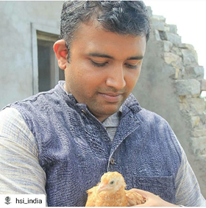
Jayasimha has previously served as Managing Director of Humane Society International, India, and was involved in the expansion of the organization in Asia, Founding Director of the Animal Law Centre at NALSAR School University of Law, Hyderabad, Member of the Animal Welfare Board of India (AWBI).
In addition to serving on several committees for various government ministries, Jayasimha has been an integral part of monitoring committees set up by the High Court of Bombay to control illegal trade in wildlife in India and the Committee for the Purpose of Control and Supervision on Experiments on Animals (CPCSEA). He has closely worked with various ministries of the Government of India, Vietnam, Sri Lanka, Bhutan, Bangladesh, Nepal where his roles have entailed drafting new legislation and codes and reviewing the existing ones to incorporate animal welfare measures for food and agricultural standards; ensuring animals are treated humanely on movie sets and depicted in the correct manner; and successfully drafting standards for animal transport, zoos and aquaria; pet shops and circuses. He has also worked on bringing in animal welfare into the Indian leather supply chain and has represented animals before various courts in India.
Jayasimha has conducted multiple training programs for Judges, Police Officers and Prosecutors on Animals Laws in India and has taught Animal Laws in top Law schools across India. Jayasimha received a law degree from Bangalore University, is enrolled as an advocate at the Bar Council of Maharashtra and Goa and is a member of Supreme Court Bar Association.
In-House Faculty :
Sumanth Bindumadhav
Sumanth Bindumadhav is a nature education and wildlife management professional with close to twenty years of experience in the field. Though an engineer by qualification, he started working with wildlife in the form of rescue and rehabilitation at the age of 12. After completing his graduation, he, along with two others, started running his own organisation focussing solely on institutionalising wildlife conflict response in the state of Karnataka as well as large scale education and awareness program on co-habiting with wildlife in rural parts of the state.

Visiting Faculty :
Sonia Shad
Sonia Shad is an animal protection lawyer. She is currently the Manager of the Animal Law Center at the National Academy of Legal Studies and Research, Hyderabad.

She graduated with a BA.LLB (Hons) from the National Law School of India University, Bangalore. She has worked with Mercy For Animals, The Humane Society International/ India, and other animal welfare organizations both in India and the United States. She is the founder of the Society for Non-Human Persons, the first student-run animal protection group at a Law School in India.
Sonia is dedicated to the eradication of systemic forms of cruelty and has been working for animal welfare and rights since 2014.
Course Coordinator
Mr.Vivek Mukherjee
Assistant Professor
NALSAR University of Law

Ask your Question
Administrative Contact
Postal Address
Directorate of Distance Education
NALSAR University of Law
Justice City, Shameerpet, Medchal District,
Hyderabad - 500101, Telangana, India.
Director (Officiating)
Professor Srikrishna Deva Rao, Vice-Chancellor,
NALSAR University of Law
Ph : +91 40 23498102
Email : [email protected]
Administrative Contact
Ms. B. Nagalakshmi
Assistant Registrar
Ph : +91 40 23498402 / 404 ; Fax: +91 40 23498403
Email : [email protected]
Mobile : 70755 89600
Postal Address
Directorate of Distance Education
NALSAR University of Law
Justice City, Shameerpet, Medchal District,
Hyderabad - 500101, Telangana, India
Subscribe
