
ONE YEAR ADVANCED DIPLOMA IN FAMILY DISPUTE RESOLUTION
About the Programme
Modern ideologies and constitutions consider an individual as the focal point, but it is the family which enables an individual in more than many ways to survive and become an effective functional unit. The stress and strain of modern day life, changing values in our lives, disintegration of the joint family system and other factors are taking a toll on family relationships.
As a result, we are witnessing a sharp increase in marital conflicts and also in the number of cases being filed in courts of law for dissolution of marriage, maintenance, custody of children, partition of joint family properties, etc. These cases take a considerable time to be decided by the courts. In the meanwhile, the litigating parties have to put up with a lot of hardship and suffering, both emotionally and financially.
In the western countries a number of trained marriage and family counsellors are available to provide counselling services to those who are having marital maladjustment and family disputes. The time has now come for India too, to create professionally qualified persons to resolve family disputes by using alternative methods of dispute settlements, which cause minimum stress on the parties in terms of emotions, money and time and aim for a win -win situation for the parties. To fulfill this need, NALSAR University of Law, Hyderabad has started this diploma course to create a pool of professionals who can offer expert advice and counsel the parties in matters relating to family disputes.
Objectives of the Course
- To give an overview of the basic law i.e. main statutes, subordinate legislations, customary law and judicial precedents in regulating family matters.
- To study the court decision making process and its functioning in family matters; to examine the conventional methods of adjudication generally; and more specifically, to better appreciate the utility of alternative dispute settlement methods in this context.
- Enable learners to pursue solutions acceptable to both parties, and thereby help meaningfully resolve the deeper conflict.
The course is relevant for legal practitioners who want to venture into family dispute resolution or who want to complement their practice in the field.
Eligibility
a. Bachelor’s Degree or an equivalent Degree in any discipline from any recognized University; or
b. Candidates who complete three years of their 5-Year Integrated Degree Programme are also eligible to apply; or
c. Candidates appearing for the final year examination of Graduation / Engineering are also eligible to apply.
Admission Procedure
Direct Admission subject to fulfilment of the eligibility criteria for the said course.
Duration, Continuation and Termination
The duration of the programme is one year and the maximum period for completion of the programme is two years including the year of admission.
Every candidate admitted to the course shall pay the prescribed fees at the time of admission. If a candidate is required to continue the course beyond the academic year because of his/her non- fulfillment of the prescribed requirements for the award of the Advanced Diploma, he/she shall pay the Continuation Fee to continue their course in the subsequent year.
The marks secured in the papers already appeared by the candidate shall be carried forward during the span of the eligibility for the programme.
After completion of the maximum period, if the candidate fails to fulfill all the requirements for the award of the Advanced Diploma, the admission stands automatically cancelled. In such cases they need to enrol afresh for the programme.
Fee Structure :
Course fee: Rs. 25,000/- p.a. (5% fee concession to the candidates belonging to SC / ST / PWD Category)
- Repeat examination / Supplementary Examination fee : Rs.500/- per paper
- Continuation fee beyond the minimum duration of the course till the maximum period : Rs.3,000/- per year
- Re-evaluation Fee : Rs. 1,000/- per paper
- Boarding & Lodging charges at campus (subject to availability) during classes / exam will be extra as per the University Rules.
- Convocation fee will be charged separately as per the University Rules.
Note: The University reserves the right to revise the Fee structure from time to time.
Course Structure
| Subject Code | Subject | Marks | Credits |
|---|---|---|---|
| 1.1 | Family, Marriage and Matrimonial Remedies | 100 | 4 |
| 1.2 | Law Governing Unfair Practices and Property Relations | 100 | 4 |
| 1.3 | Family Disputes and Alternative Dispute Resolution Mechanism | 100 | 4 |
| 1.4 | Principles of Family Psychology | 100 | 4 |
Conduct of the programme
The Advanced Diploma Programme will be for a period of one year. Personal Contact Programme(PCP) sessions will be held twice in a year by the subject experts. Relevant course material will be uploaded on the website and can be accessed through their login id. The Self Learning Materials (Reading Materials) printed copies will also be sent to the enrolled candidates.
PCP sessions will be conducted for four days twice in a year at Hyderabad by the subject experts. Suggested reference guidance would be provided at the contact sessions. Each subject shall consist of 12 teaching hours which will come to 48 teaching hours for the total programme.The recorded videos of the classes will be uploaded on the dedicated website and can be accessed by the candidates through their login ids.Attendance at the PCP is not compulsory but candidates are advised to attend the classes as they are important to understand the subject and successfully complete the course.The learners are also expected to put in at least 30 hours of study for each credit.
The website will be the main delivery system in terms of updating information on the subject. The access to the website will be deactivated after the completion of the minimum duration and will be revived on the payment of the continuation fee.
Academic Calendar (Tentative)
Admission Process From February to June every year
| S.No. | Name of the Activity | Tentative months | |
|---|---|---|---|
| From | To | ||
| 1 | Distribution of course material | July | August |
| 2 | Personal Contact Programme(First Round) | September | October |
| 3 | Personal Contact Programme (Second Round) | February | March |
| 4 | Examinations | May | June |
| 5 | Declaration of Results | July | August |
| 6 | Repeat / Supplementary Examinations | October | November |
Note : The PCP Sessions (classes) will be conducted in blended mode (online / physical) at NALSAR University of Law, Hyderabad. However, the examinations will be conducted physically at Hyderabad only.
Evaluation Scheme& Award of Advanced Diploma
Examination
There will be one annual examination for each subject. Each paper shall carry 100 marks.
Award of Grades
The performance of all the candidates in all courses shall be evaluated on a 10 point scale with corresponding grade values as mentioned below:
| Percentage of Marks | Grade | Grade Value |
|---|---|---|
| 90 and above | O+ (Exceptionally Outstanding) | 10 |
| 85 – 89 | O (outstanding) | 9 |
| 80 – 84 | E+ | 8.5 |
| 75 – 79 | E (Excellent) | 8 |
| 70-74 | A++ | 7.5 |
| 65-69 | A+ | 7 |
| 60-64 | A | 6.5 |
| 55-59 | B+ | 6 |
| 50-54 | B(Pass) | 5.5 |
| Below 50 | F(Fail) | 0 |
Calculation of CGPA
Cumulative Grade Point Average (CGPA) is arrived at by dividing the sum of the products of Grade Values and the Course Credits in each subject by the total number of credits in all the subjects.
A candidate to be successful should obtain a minimum of 50% marks or the equivalent grade, i.e., B in every subject. However, the candidate who fails to obtain the minimum grade (i.e., B) shall be given chance(s) to re-appear for the examination whenever the same is conducted till the completion of the maximum period, i.e., two years from the date of admission on payment of repeat / supplementary examination feeand the continuation fee as prescribed. No candidate who has cleared the subject by securing 50 marks or above is allowed to re-appear in the examination for improving the marks / grade.
Rounding off and Award of Grace Marks
In case a candidate obtains fractional marks, the fraction will be rounded off to the nearest whole number.
The Course Coordinator with the approval of the Director, DDE may add FIVE grace marks in total for all the subjects to enable a candidate to pass the examination. The said provision will not be applicable in case of re-evaluation and/or for improvement of grade.
Provided that under no circumstances, a candidate shall be granted more than five grace marks to be distributed in all subjects.
Award of the Advanced Diploma Certificate
A candidate to be eligible for the award of the Advanced Diploma in Family Dispute Resolution should secure 50% marks or ‘B’ grade in all the subjects obtaining atleast CGPA of 5.50 out of 10.00.
A candidate admitted to the program has to complete all the prescribed requirements within a maximum period of two years from and including the year of admission in order to be eligible for the award of the Advanced Diploma.
Procedure for Re-counting / Re-evaluation
The candidates desiring of re-evaluation have to apply in writing along with the re-evaluation fee within 15 days from the date of declaration of results.On the receipt of the request for re-evaluation, the paper would be sent to subject expert other than the evaluator and the results of the same will be communicated within 45 days. A change in the original score shall be made only when, upon re-evaluation, the change is FIVE marks or more. The Re-evaluation result is final and there will be no further appeal to the same.
No candidate who has cleared the subject by securing 50 marks or above is allowed to re-appear in the examination or apply for re-evaluation for improving marks/grade.
The recounting of the paper would be done without collecting any fee but on the written request to the Director, DDE by the candidate. The change, if any, shall be incorporated accordingly.
Misconduct Rules
The Vice-Chancellor on the report and recommendation of the Course Co-ordinator can cancel the registration of a candidate and also debar them from examinations and further enrolment if he or she is found to be indulging in abusive, unruly behavior with the faculty or staff of the University. Such behavior will also include abusive mails, phone calls or defamatory tweets / posts / blogs etc.
The NALSAR University Academic Mis-Conduct Regulations, as approved by the Executive Council of the University will apply suitably for the candidates enrolled for this programme.
Refund of Fee in case of withdrawal of admission
a) In case of withdrawal within 15 days from the closure of the admission, 10% of the course fee paid shall be retained by the University towards administrative charges;
b) In respect of candidates who withdraw their candidature after 15 days from the closure of admission, total course fee paid by the candidates shall be retained by the University.
c) All other fee other than course fee, once paid is non-refundable.
Note:The University reserves the right to modify the admission process, fee structure, course structure, course content, the evaluation scheme and other Rules from time to time.
ONE YEAR ADVANCED DIPLOMA IN FAMILY DISPUTE RESOLUTION
In-House Faculty :
Justice B Prakash Rao
Former judge,
Andhra Pradesh High Court
Justice B Prakash Rao is a former judge of the Andhra Pradesh High Court. He joined the Bar in 1972 and practiced at various courts until he was elevated as a Judge of the Andhra Pradesh High Court in 1999. He has been the Acting Chief Justice of Andhra Pradesh (Nov- Dec, 2010) and retired in the year 2011.
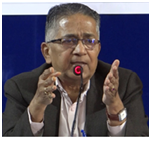
During his term as a judge at the Andhra Pradesh High Court, Justice Rao served in a number of positions, including the post of President of the Andhra Pradesh Judicial Academy and introduced various training programs.
Faculty :
Prof. Poonam Pradhan Saxena
Vice Chancellor,
National Law University, Jodhpur
Prof. PoonamPradhanSaxena is presently Vice Chancellor of National Law University Jodhpur. She has been awarded the prestigious Senior Fulbright Fellowship (1998) and Shastri-Indo Canadian Fellowship (2000).
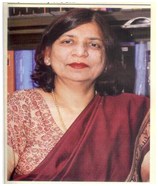
She has been an illustrious writer of various books including Mulla’s Transfer of Property Act, 1882 (Lexis Nexis, Butterworth India), Family Law Lectures, Family Law-II (Lexis Nexis, Butterworth India), Property Law (Lexis Nexis, Butterworth India),
Faculty :
Mr. Krishna Prasad Tenneti
Director General of Police and
Chairman Road Safety Authority,Telangana
Mr. Krishna Prasad Tennetiis presently Director General of Police and Chairman Road Safety Authority Telangana. He has done his PGDM from Indian Institute of Management Ahmedabad.
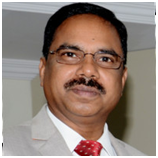
He is the author of Trafficking in Persons Tip of the Iceberg, published by United Nations Development Fund for Women.
Faculty :
Prof. G B Reddy
Professor of Law, Osmania University
Prof. G B Reddy is Professor of Law at Osmania University. At present he is the Director, University Foreign Relations office.

He has vast experience in the field of law and has authored 20 well received books.
Faculty :
Prof Y F Jayakumar
Principal,Pendekanti Law College, Hyderabad
Prof Y F Jaykumar: Prof. Jayakumar is subject expert in Family Law and Alternative Dispute Resolution.
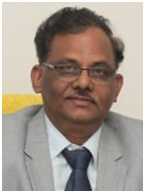
He was Professor and Dean, Faculty of Law, Osmania University and presently Principal of Pendekanti Law College, Hyderabad. He is a visitor to SardarVallabhai Patel National Police Academy and MarriChenna Reddy Institute of Human Resources. He is the author of Horizons of Family Law in India.
Faculty :
Dr. Saroj Arya
Professor in Clinical Psychology,
Sweekar Academy of Rehabilitation Sciences,
Secunderabad
Dr. Saroj Arya is presently Professor in Clinical Psychology at Sweekar Academy of Rehabilitation Sciences, Secunderabad. Before joining the current assignment she was Associate Professor & Head Dept. of Rehabilitation Psychology, NIEPID, Secunderabad.
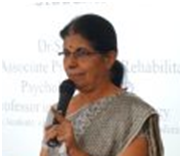
She has a more than 30 years’ experience in Teaching & Training at PG & M.Phil level in Psychology. She has Research experience of carrying out multi-centric research studies in the field of Psychology, Nutrition, Mental Health and Disability Rehabilitation.
She has developed Indian Tools for Child Development Assessment and Autism & Manuals for Cognitive enhancement in early childhood. She has participated in national / international conferences/ seminars and published 50 articles in National and International Journals.
She has completed course on i) Gender and Management and ii) Planning with Women for Development at University of London
Faculty :
Mr. Sumit Attri
AOR at the Supreme Court of India and
Director Dispute Resolution at Cyril Amarachnad
Mr. Sumit Attri, is an AOR at the Supreme Court of India and Director Dispute Resolution at Cyril Amarachnad. He has done his LL.B. from Symbiosis Law School Pune.
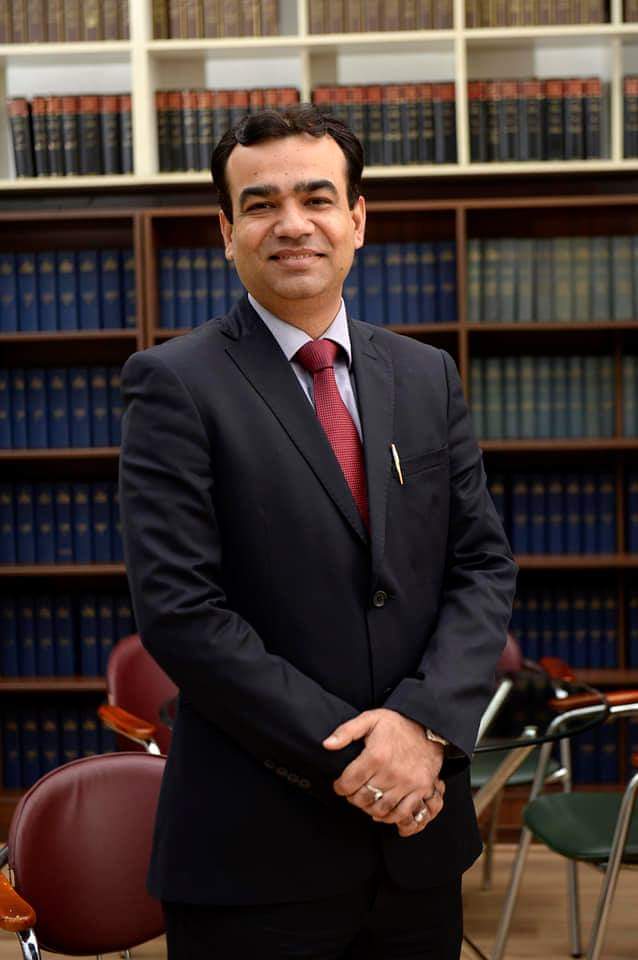
Mr. Attri has vast experience of handling various disputes ranging from family law to corporate commercial matters before different courts and tribunals.
Course Coordinator
Ask your Question
Administrative Contact
Postal Address
Directorate of Distance Education
NALSAR University of Law
Justice City, Shameerpet, Medchal District,
Hyderabad - 500101, Telangana, India.
+91 40 23498403
Director (Officiating)
Professor Srikrishna Deva Rao, Vice-Chancellor,
NALSAR University of Law
Ph : +91 40 23498102
Email : [email protected]
Administrative Contact
Ms. B. Nagalakshmi
Assistant Registrar
Ph : +91 40 23498402 / 404 ; Fax: +91 40 23498403
Email : [email protected]
Mobile : 70755 89600
Postal Address
Directorate of Distance Education
NALSAR University of Law
Justice City, Shameerpet, Medchal District,
Hyderabad - 500101, Telangana, India
Subscribe
